


In practice, AR and traditional e-commerce are not two separate ways of selling: AR is a layer added to an ordinary product page. So the comparison comes down to one practical question: does a product page with 3D, AR or AI try-on sell better than the same page with photos and text only? For some
product categories there is solid data on this. For others there is almost none, and that is also useful to know before spending money on it.
Three different technologies that often get lumped together as “AR”
-
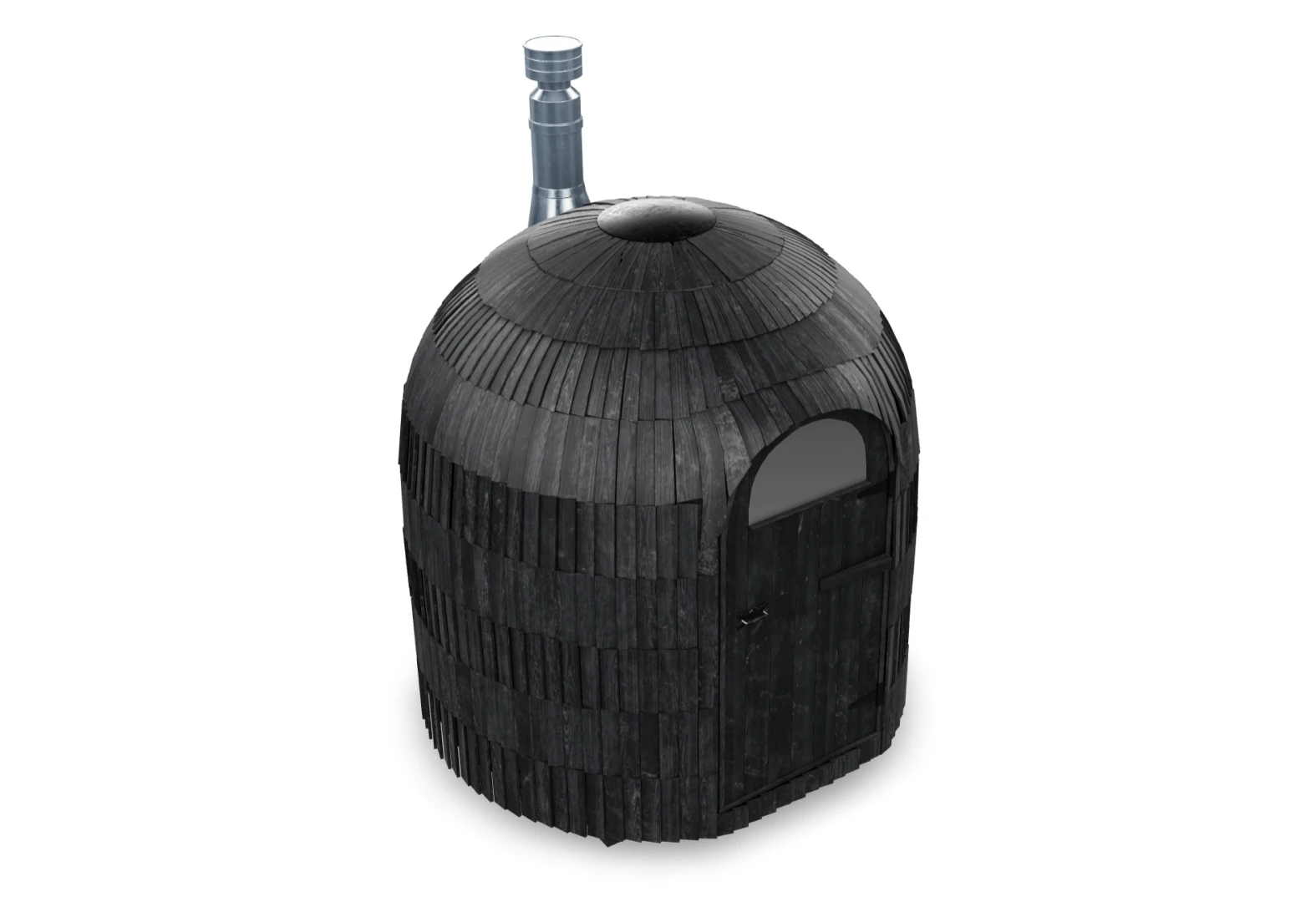
3D viewer. An interactive model on the product page that the shopper can rotate, zoom and view from any angle. This is not AR, because nothing is placed into the real world.
-
AR (augmented reality). The phone’s camera places a true-to-scale 3D model into the shopper’s room. Modern web AR opens straight from the product page, with no app to install.
-
AI try-on. A neural network applies clothing, glasses, jewelry or a watch to the shopper’s own photo. This is not AR either. It works on a still photo, not on a live camera view.
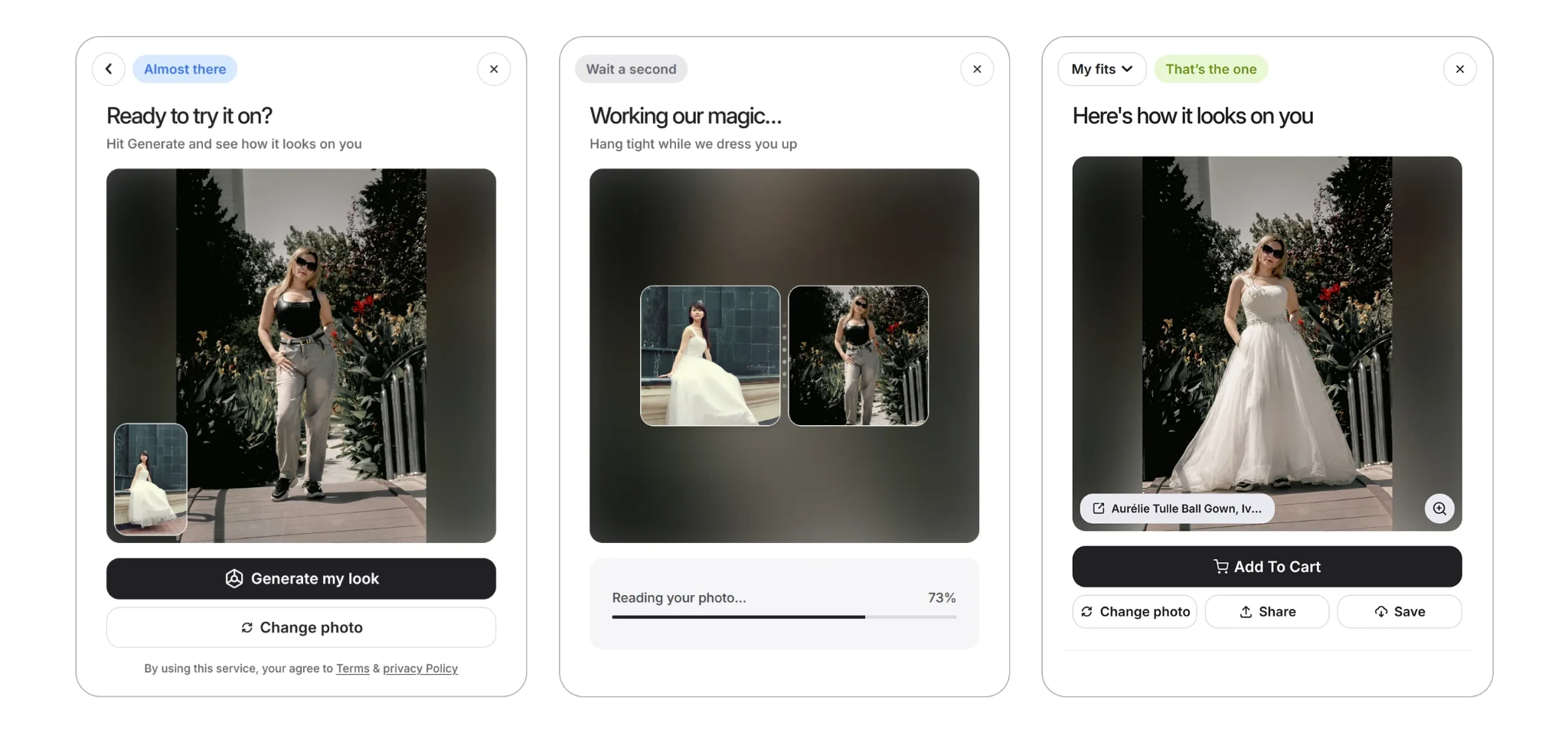
Vizbl.com offers all three, and they solve different problems. Mixing them up is the most common mistake in articles about “AR shopping.”
What a standard product page does well and where it stops
Photos, a description, specs and reviews answer the question “what is this product?” well. For most purchases, like a phone charger, detergent or a book, that is enough. 3D adds nothing there, so building models for such products is a waste of money.
The gap shows up with products where the shopper’s context matters: size relative to their room, how a color looks in their lighting, whether a frame suits their face. A photo taken in a studio cannot show that. So shoppers compensate by guessing, ordering several sizes or colors, or leaving the
page.
|
Shopper’s question |
Photos + text |
3D viewer |
AR |
AI try-on |
|
What does it look like? |
✓ |
✓ |
✓ |
✓ |
|
What does it look like from every angle? |
Partly (gallery) |
✓ |
✓ |
– |
|
Will it fit my room? |
Only by dimensions in the specs |
– |
✓ |
– |
|
How will it look on me? |
– |
– |
– |
✓ |
What the data says about conversions and returns
Many figures that still circulate in articles about AR come from case studies of 2017 to 2020 or can’t be traced back to a working source, so we leave them out. The most recent large-scale data comes from Zalando, which scanned about 10,000 footwear SKUs in 3D during 2025:
-
Zalando with ALLSIDES (NVIDIA case study, 2026): shoppers spend 15–20% more time on product pages with enhanced 3D and video content, and products with enhanced 3D get a 3–4% higher add-to-cart rate. The average session in the AR view lasts about 30 seconds, and Zalando reports a significant
drop in footwear returns.
-
A Snap and Publicis Media survey by Alter Agents (2022, 4,028 respondents in the US, UK, France and Saudi Arabia) found that two-thirds of shoppers say they are less likely to return a product after using AR. 80% say AR makes them more confident in their purchase.
The Snap figures are what respondents said about themselves, not measured return rates, and returns caused by defects, shipping errors or a simple change of mind don’t depend on AR at all. Both sources also compare shoppers who chose to open 3D or AR with those who didn’t, and those shoppers were
probably more interested in the product to begin with. The most reliable estimate for your own store is an A/B test: the same products with and without 3D or AR.
Which categories benefit most, and which tool fits each
AR itself comes in two kinds, and they suit different catalogs. Image-based AR works from ordinary product photos: wall art (this is how Vizbl’s Wall Art works), flooring, rugs. It needs no 3D modeling, so it can be connected to any number of products, exclusive or not, because the AR view is
assembled dynamically from the photo. Classic AR requires a true-to-scale 3D model of each product. It is most useful for large items made in series, such as furniture, home appliances and outdoor equipment, where one model stays in use for years.
|
Category |
Tool |
Why |
|
Furniture, home appliances, lighting, fireplaces, outdoor equipment |
Classic AR (3D model) |
Size and scale in the room matter most |
|
Rugs, flooring |
Image-based AR (from product photos) |
Scale and how the material looks across the floor |
|
Wall art, posters |
Image-based AR on the wall |
Choosing size and frame |
|
Clothing, eyewear, jewelry, watches |
AI try-on |
Question is “how will it look on me,” not “in my room” |
|
Large equipment (vending machines, etc.) |
AR |
Checking fit in a specific space |
For consumables and simple products (household goods, electronics accessories), 3D and AR are useless: they answer no question the shopper actually has.
Where AR creates friction instead of reducing it
-
Model quality. Classic AR does not work without a 3D model at all, so the model is the product the shopper actually sees. If it is inaccurate in size, color or detail, AR creates the wrong expectations and causes the very returns it was supposed to prevent.
-
Load time and access. Few shoppers will install an app just to see one product, so stores usually use web AR that opens from the product page. It runs in the browser, so it is technically weaker than a native app. How fast it loads depends on the implementation and the vendor:
a poorly built web AR experience loads slowly, and shoppers close it before the model appears. -
Content cost. Classic AR needs a 3D model for each product, and for a large catalog this is the main cost. It pays off when one model stays in use for a long time, as with products made in series. Image-based AR (wall art, rugs, flooring) skips 3D modeling entirely and works
from existing product photos. -
Adoption. Most shoppers already know AR from Pokémon Go, which came out in 2016, and from Instagram and Snapchat filters, so the button rarely confuses anyone. Still, not everyone will tap it, so the product page must work fully without it.
How AR fits with SEO
3D and AR are not ranking factors in themselves. Search engines still rank product pages on titles, descriptions, specifications, reviews, structured data and internal links, and a 3D block does not replace any of that. Their SEO value is indirect, in two ways. First, they keep visitors on the
page longer: Zalando reports 15–20% more time spent on product pages with enhanced 3D and video content. Second, Google can show a product’s 3D model right in Search if the store adds a 3D model to its Merchant Center feed, although for now this works only for shoes and home goods sold in the US.
For the store, this means more engagement and a more noticeable listing, while the text content still does the ranking work.
Verdict
A page with 3D, AR or AI try-on sells better than a page with only photos for categories where the shopper’s main doubt is about size, fit or appearance in their own space or on themselves. The public data for these categories shows higher conversion and fewer “not as expected” returns. For simple
and familiar products, they add nothing.
Practical approach: start with the one or two categories where returns for “didn’t fit” or “looked different” are highest, add AR or try-on there, and compare conversion and return rates against the same products without it


